
ULTRAFAST PHOTONICS LABORATORY
Dept. of Applied Physics, DIAT, Pune

To play, press and hold the enter key. To stop, release the enter key.


Facilities @ UPL
The laboratory facilities are housed inside a Class-10000 Clean room


Fiber Glass Processing System
This system is capable of splicing dissimilar fibers, specialty fibers and Polarization Maintained fibers of up to 1.25 mm diameter. Moreover, it can do fiber tapering, ball lensing of fibers for sensors and probes.
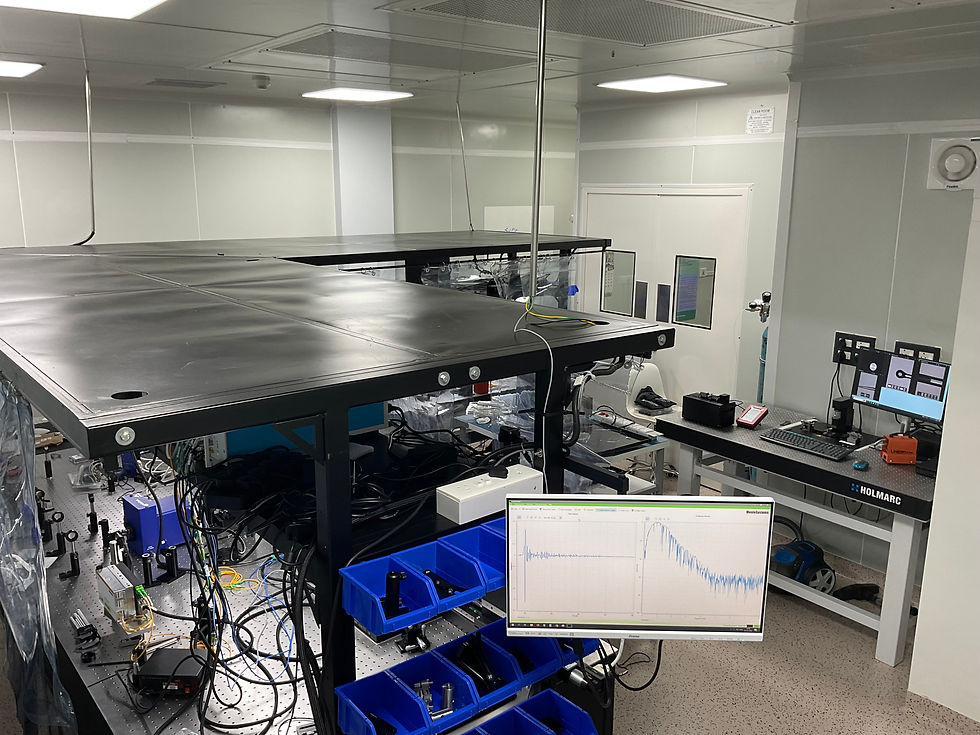

THz Time Domain Spectroscopy & Imaging
The customized system can do THz spectroscopic studies in transmission and reflection mode simultaneously. The imaging in time and frequency domains are conducted in transmission mode. The peak-to-peak power is ~12 V with a frequency bandwidth up to 6 THz

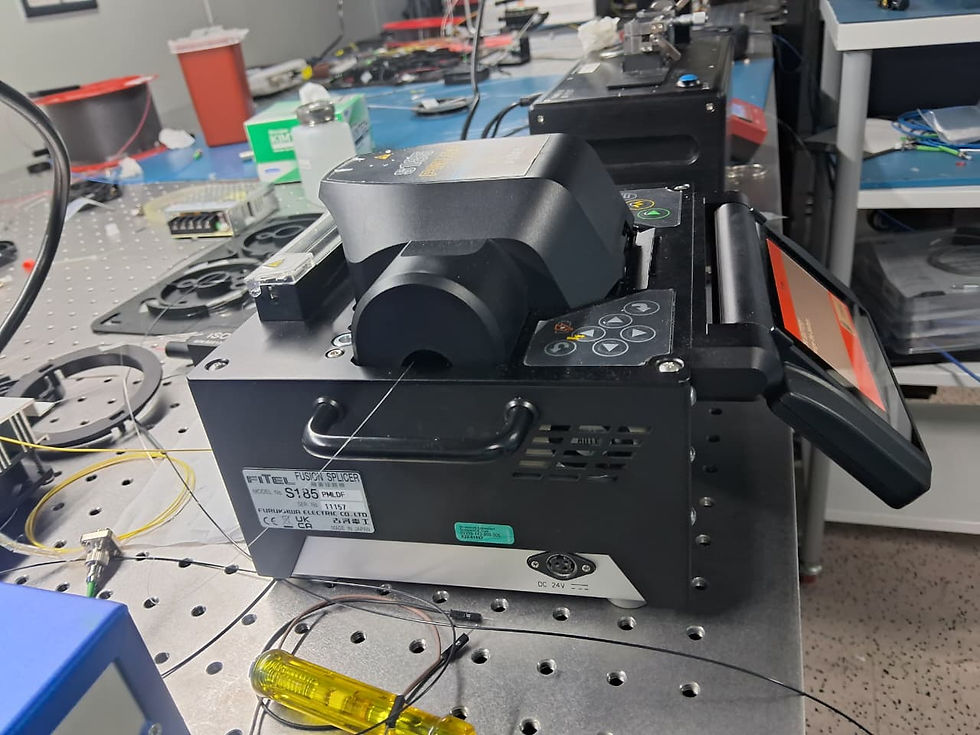

Polarization Maintained Fiber Splicer
This is a compact fiber splicer which can handle Polarization Maintained fibers, with a provision for sleeving of the spliced joint, for added mechanical strength.


Fiber Auto-Cleaver
This system is capable of doing automated cleaving of Polarization Maintained as well as other speciality fiber with utmost precision, making it suitable for high power applications. The system is also capable of doing angle cleaving, according to user's needs.


Manual Cleaver
This system is capable of doing a smooth, flat, and perfectly perpendicular end-face splice on a glass fiber, making it suitable for high-power applications.


Femtosecond Driver Module
A femtosecond laser module system is an ultra-fast optical powerhouse capable of emitting light pulses lasting only a few quadrillionths of a second. Because these pulses are incredibly brief, the laser behaves entirely differently from standard continuous-wave or nanosecond lasers.


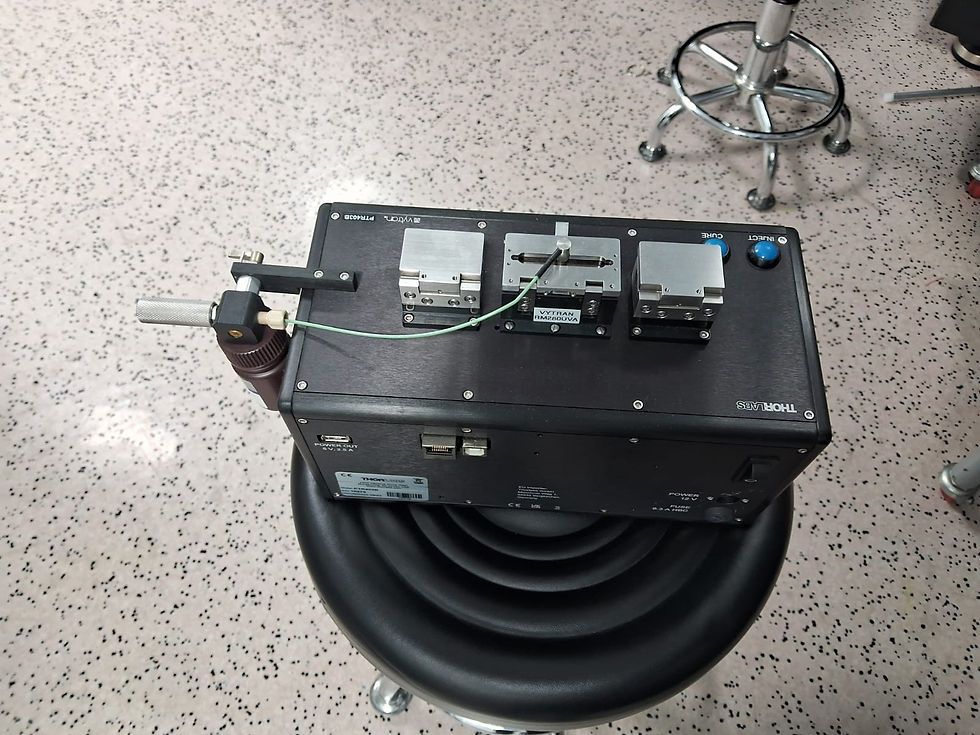
Fiber Recoater
Optical fiber recoater system is a precision device used to restore the protective polymer coating (usually a UV-curable acrylate or polyimide) onto a glass optical fiber after it has been stripped, cleaned, and spliced. When two fibers are fused, their original protective jackets must be removed, leaving the fragile glass bare and highly vulnerable to snapping, moisture, or micro-bending losses. The recoater restores the fiber's original mechanical strength and flexibility, making it handleable again.


Interferometric Autocorrelator and FROG Unit
Interferometric Autocorrelator and FROG (Frequency-Resolved Optical Gating) Unit is the ultimate diagnostic workstation for ultrashort (femtosecond and picosecond) laser pulses. Because femtosecond laser pulses are the fastest events ever created by humanity, standard electronics, photodiodes, and streak cameras are far too slow to measure them. This integrated system uses the laser pulse to measure itself through nonlinear optics, offering a dual layer of measurement capabilities.


Lock-in Amplifier
Lock-in Amplifier is an incredibly powerful instrument capable of extracting a microscopic electrical signal from an environment overwhelmed by noise. It acts as an extreme, ultra-narrow bandpass filter that can detect AC signals even when the background noise is up to 1 million times larger than the signal.It accomplishes this impossible-sounding feat through a technique known as Phase-Sensitive Detection (PSD), which locks onto a specific reference frequency


Optical Spectrum Analyzer
Optical Spectrum Analyzer (OSA) is a high-precision instrument capable of measuring and displaying the optical power of light as a function of its wavelength or frequency. Think of it as a specialized camera that takes an incoming beam of light, splits it into its individual spectral colors, and meticulously measures the exact intensity of each color component.


DC Power Supply Unit
DC Power Supply Unit (PSU) is a critical device designed to convert an available input power source (usually alternating current (AC) from a wall outlet) into a highly regulated, clean, and stable direct current (DC) electrical output. From standard lab bench supplies to advanced programmable industrial systems, a DC power supply is capable of a wide range of regulation, protection, and simulation tasks.


IR Viewer
IR Viewer (Infrared Viewer) is a handheld or bench-mounted electro-optical device capable of converting invisible infrared (IR) light into visible light. Because the human eye can only perceive wavelengths between roughly 380 and 750 nanometers, an IR viewer acts as a bridge, allowing technicians, scientists, and engineers to safely see and align invisible laser beams and infrared light sources in real time.

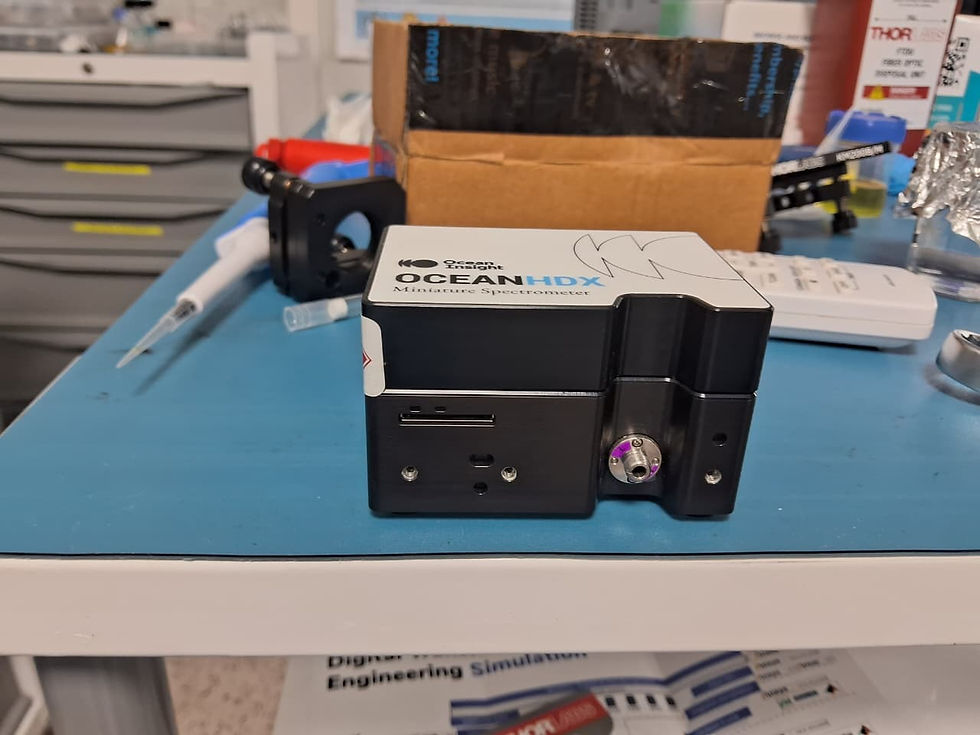

Fiber Spectrometer
Fiber Spectrometer (or Fiber-Optic Spectrometer) is a highly compact, versatile optical instrument capable of measuring the intensity of light across a specific range of wavelengths. Unlike massive, traditional laboratory spectrometers that require complex external mirror setups to guide a beam, a fiber spectrometer connects directly to an optical fiber. This allows it to capture light directly from almost any source—whether it is a laser beam, a chemical solution, or a distant star.
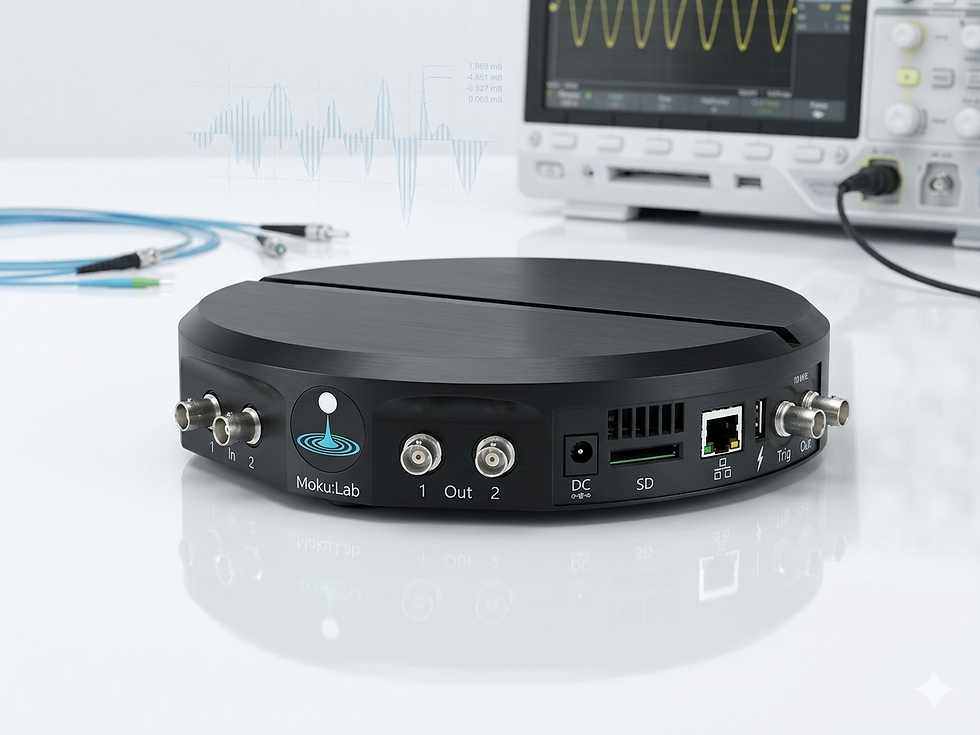


Moku:Lab Multi-instrument module
The Moku:Lab by Liquid Instruments is a software-defined hardware platform capable of replacing a whole stack of traditional laboratory equipment with a single device. Instead of relying on rigid, single-purpose analog circuitry, the Moku:Lab uses a high-performance FPGA (Field-Programmable Gate Array) paired with high-speed analog-to-digital and digital-to-analog converters (ADCs/DACs).
This architecture allows the system to reconfigure its internal digital routing on the fly, transforming into over a dozen distinct professional-grade instruments via a software interface.
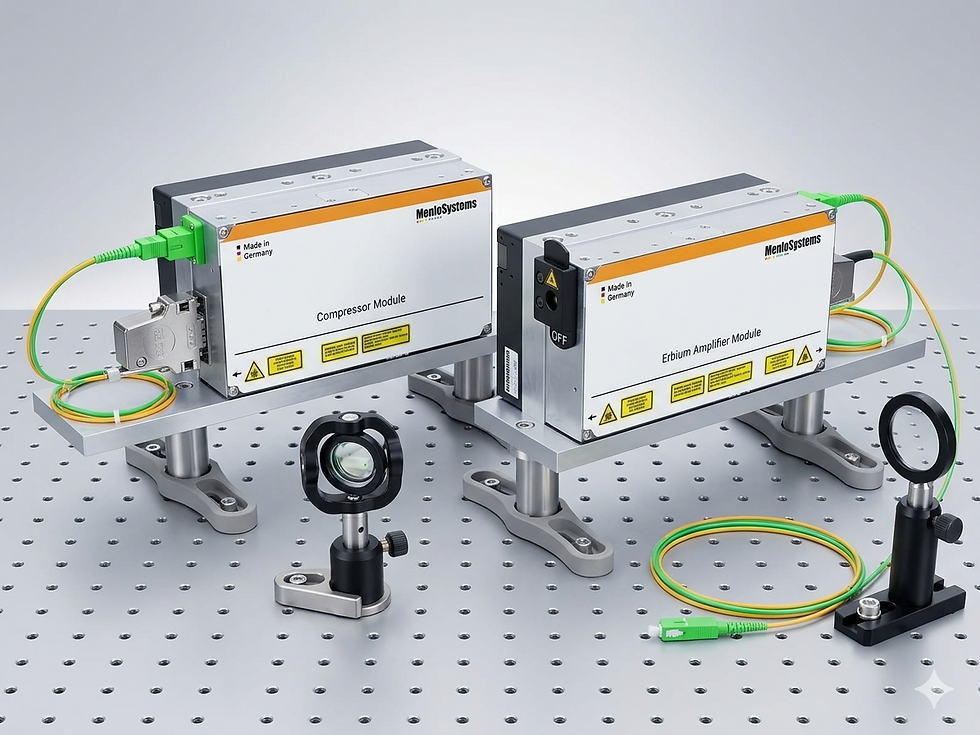


Erbium doped femtosecond laser and amplifier
Erbium-Doped Femtosecond Laser and Amplifier System is a highly specialized, ultra-fast optical setup engineered around an erbium-doped gain medium (typically a silica fiber or crystal). Erbium is a rare-earth element that naturally emits light in the 1.55-microliter (1550 nm) wavelength band when optically pumped. Because this wavelength aligns perfectly with the absolute minimum loss window of standard silica optical fibers, and because the system combines a seed oscillator with an amplifier stage, it is capable of delivering exceptionally high peak power pulses with extreme stability.

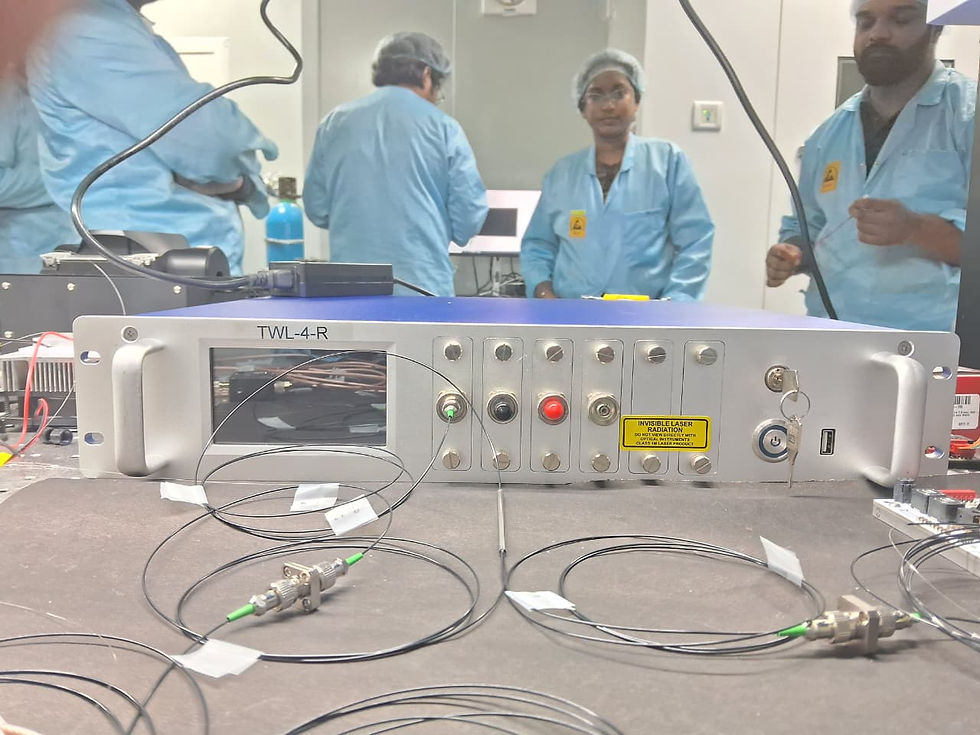

C & L band tunable LASER
C & L Band Tunable LASER System is a high-performance coherent light source capable of adjusting its output wavelength across a massive sweep of the near-infrared spectrum. Specifically, it bridges two of the most critical spectral windows in modern photonics: the C-band (Conventional: ~1530 nm to 1565 nm) and the L-band (Long: ~1565 nm to 1625 nm). Because a single system can dynamically shift across this complete 90+ nanometer range, it eliminates the need to buy separate, fixed-wavelength lasers for different tasks


Optical Chopper System
Optical Chopper System is a precision optomechanical device capable of periodically interrupting a light beam (such as a laser or broadband light source) at a highly stable, user-defined frequency.
By physically blocking and unblocking a light path using a rotating slotted disc, the chopper transforms a steady continuous-wave (CW) light signal into a modulated "chopped" AC square wave signal.